

PPF vs Ceramic Coating in Kelowna: Which Does Your Car Need?
PPF vs Ceramic Coating in Kelowna: Which Does Your Car Need?
PPF stops rock chips; ceramic coating adds gloss and easy washing. This article explains the difference, when to choose each, and why many Okanagan drivers combine both.
The Quick Answer
Paint protection film (PPF) is a thick, clear urethane film that physically absorbs rock chips and scratches. Ceramic coating is a thin, hard chemical layer that adds gloss, repels water and makes washing easier, but it won't stop a rock chip. If you drive Hwy 97 or the Okanagan Connector (Hwy 97C) often, PPF on the front end plus ceramic coating on the rest of the car gives you the best of both.
We install both every week at our Kelowna studio, so this guide is based on what we actually see on customer vehicles, not marketing claims.
What Is Paint Protection Film (PPF)?
PPF is a transparent, flexible film applied over your painted panels. Premium films have a self-healing top layer: light scratches and swirls fade away when exposed to heat or sun. XPEL notes that deeper scratches that cut through the film may not heal and might need the panel re-filmed.
Top-tier films such as XPEL Ultimate Plus carry a 10-year manufacturer warranty. Learn more about our paint protection film service.
What Is Ceramic Coating?
Ceramic coating is a liquid that bonds to your clear coat and cures into a hard, glass-like layer. It makes paint glossier, sheds water, resists bird droppings, sap and UV, and makes dirt release easily when you wash.
What it can't do is absorb impact. A coating is measured in microns; a rock at highway speed goes straight through it. See our ceramic coating packages, or read more on the benefits of ceramic coating.
PPF vs Ceramic Coating: Side-by-Side Comparison
Here's how the two compare on the things customers ask about most:
- Rock chip protection: PPF — yes, absorbs impacts. Ceramic coating — no.
- Light scratch protection: PPF — yes, self-heals with heat. Ceramic coating — minor resistance only.
- Gloss and depth: PPF — good. Ceramic coating — excellent.
- Water beading and easy washing: PPF — moderate (unless coated). Ceramic coating — excellent.
- UV, sap and bird-dropping resistance: PPF — yes. Ceramic coating — yes.
- Typical lifespan: PPF — up to 10 years (premium film). Ceramic coating — 2 years to lifetime, by package.
- Coverage: PPF — usually high-impact areas; full wrap optional. Ceramic coating — whole vehicle, including wheels and glass.
See real customer vehicles in our gallery.
Which One Should You Choose?
Choose PPF if…
- You commute on Hwy 97 or drive the Okanagan Connector to Vancouver regularly (check DriveBC for current road conditions).
- You own a new, leased, or high-value vehicle and want to avoid repainting.
- You plan to keep the car for many years or sell it in top condition.
Choose ceramic coating if…
- You mostly drive around town in Kelowna, West Kelowna or Lake Country.
- Your priority is gloss, easy washing, and protection from sun, sap and bird droppings.
- You want whole-vehicle protection.
Choose both if…
- You want the front end protected from chips and the whole car easy to clean.
- You want maximum resale value. Coating over PPF also keeps the film cleaner and more hydrophobic.
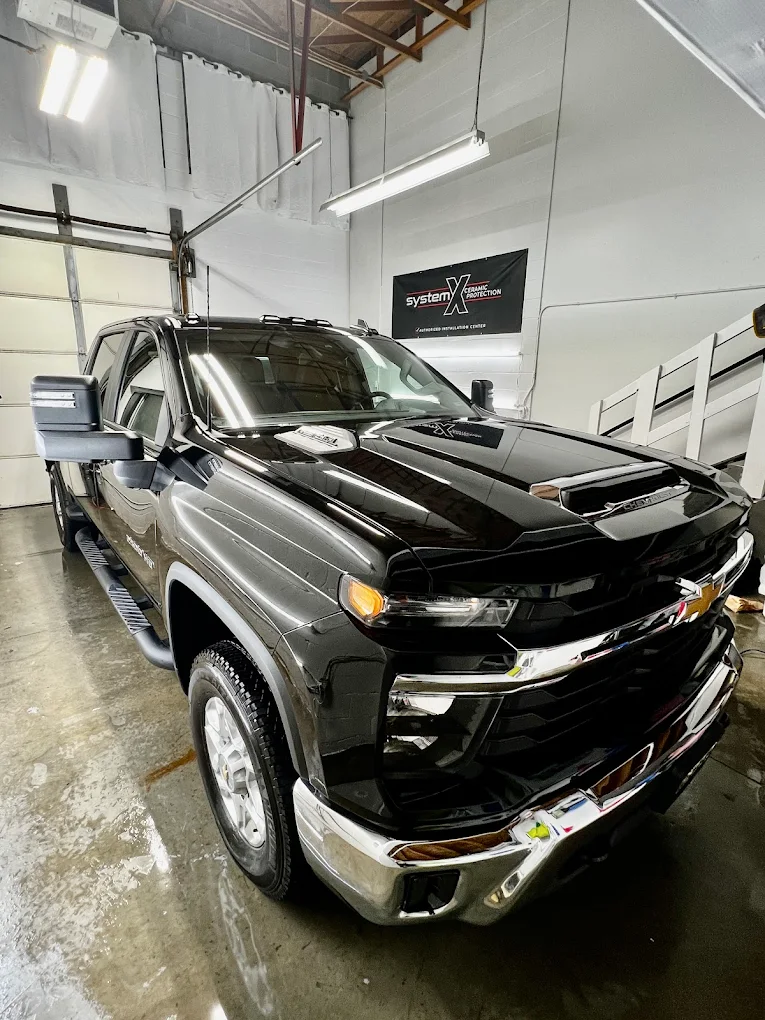
The most popular combo we install is front-end PPF (bumper, hood, fenders, mirrors) with a ceramic coating over the entire car.
Our Process at Drew's Autosports
- Paint inspection under studio lighting to check for chips, swirls and scratches.
- Decontamination wash and clay bar to remove bonded grime.
- Paint correction where needed, because film and coatings lock in whatever is underneath. See paint correction.
- PPF installation with wrapped edges where the panel allows.
- Ceramic coating applied over paint and film.
- Cure in our climate-controlled bay, including a 24-hour cure after the final coating layer.
Every coating is documented on your CARFAX Canada report, which helps at resale.
Frequently Asked Questions
Is PPF better than ceramic coating?
Neither is better overall; they do different jobs. PPF protects against physical damage like rock chips. Ceramic coating protects against chemical and UV damage and makes washing easier.
Can you put ceramic coating on top of PPF?
Yes, and we recommend it. Coating the film adds gloss, makes it hydrophobic, and helps prevent staining from bugs and road grime.
Does ceramic coating prevent rock chips?
No. A coating is far too thin to absorb the impact of a stone. Only PPF provides real chip protection.
How long does PPF last?
Premium films last up to 10 years with proper care and carry a 10-year manufacturer warranty. Budget films may yellow or peel much sooner.
Is PPF worth it in Kelowna?
For most drivers who use Hwy 97 regularly, yes, at least on the front end.
Do you serve customers outside Kelowna?
Yes. We regularly protect vehicles from Vernon, Lake Country, Peachland and Summerland.
Key Takeaways
- PPF stops rock chips and self-heals light scratches; ceramic coating does not stop chips.
- Ceramic coating gives the best gloss, water beading and easy washing.
- For Okanagan highway driving, front-end PPF plus a full ceramic coating is the strongest setup.
- Paint should be corrected before either product goes on.
Get a Free PPF or Ceramic Coating Quote in Kelowna
Not sure which is right for your vehicle? Tell us what you drive and how you use it, and we'll recommend an honest setup within 24 hours, with no upsells.
Get a Free Quote · Call or text (778) 562-5004 · Unit 19 - 2550 Acland Rd, Kelowna · Open 7 days, by appointment · Contact us
Related reading: The Benefits of Ceramic Coating for Your Vehicle · Common Auto Detailing Mistakes to Avoid · Our gallery
Ready to elevate
your car's shine and protection?
Join 300+ Kelowna car owners who trust Drew's Autosports with theirpaint. Book a free quote — no pressure, no hidden upsells.
